
All 45 European Countries in Chinese — and the 7 Characters Behind Most of Them
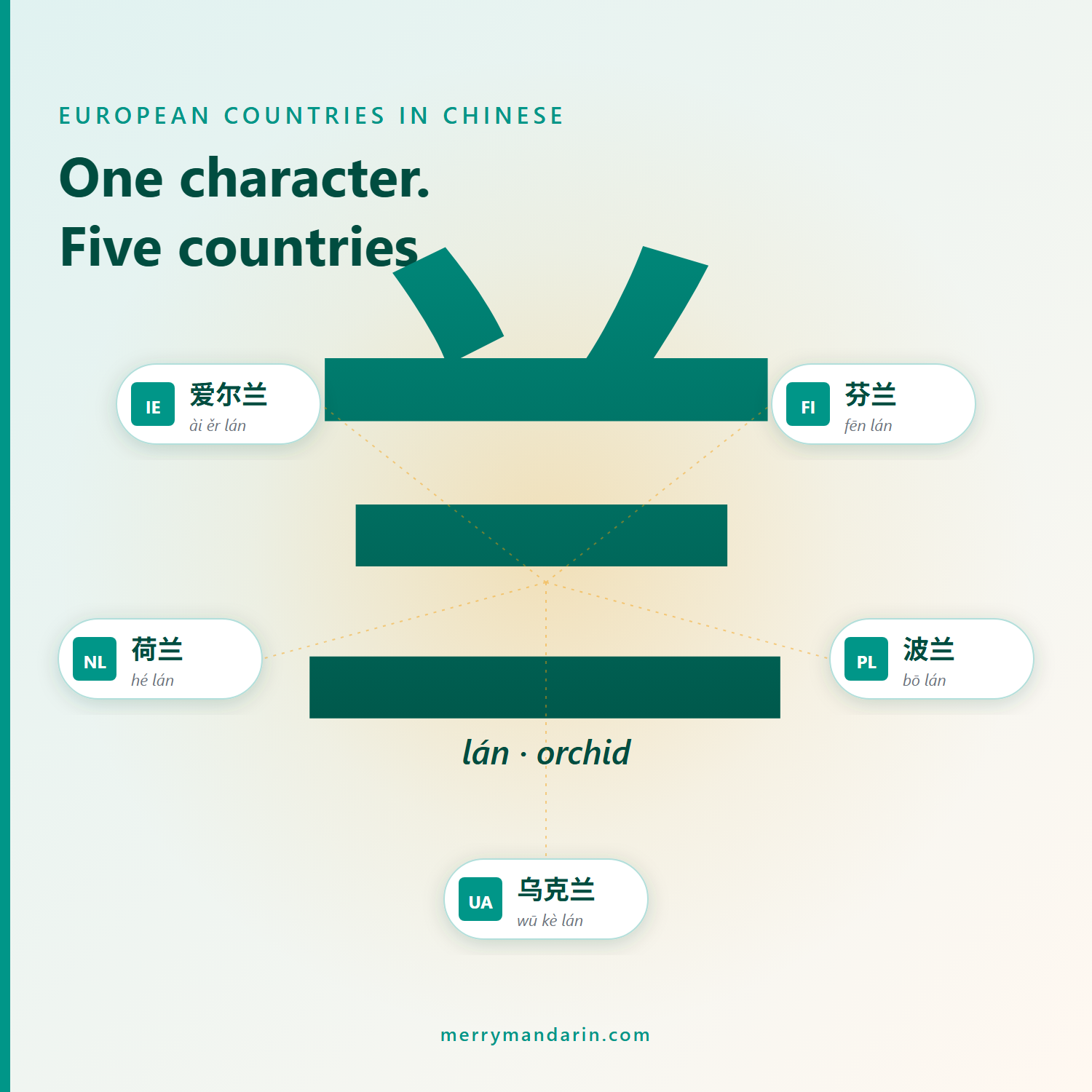
You can sit in a Shanghai café with a state-news broadcast on the screen behind the bar and watch the names of European countries scroll past in a strip along the bottom. 爱尔兰. 芬兰. 荷兰. 波兰. 乌克兰. Five different countries, five different European stories, and one character — 兰 (lán), the character for orchid — sitting in all of them. Once you see it, you cannot unsee it. And once you can read it, you can pronounce roughly an eighth of Europe in Mandarin without having to learn five new names from scratch.
Mandarin Fluency Calculator: How Long Does It Take to Learn Chinese?
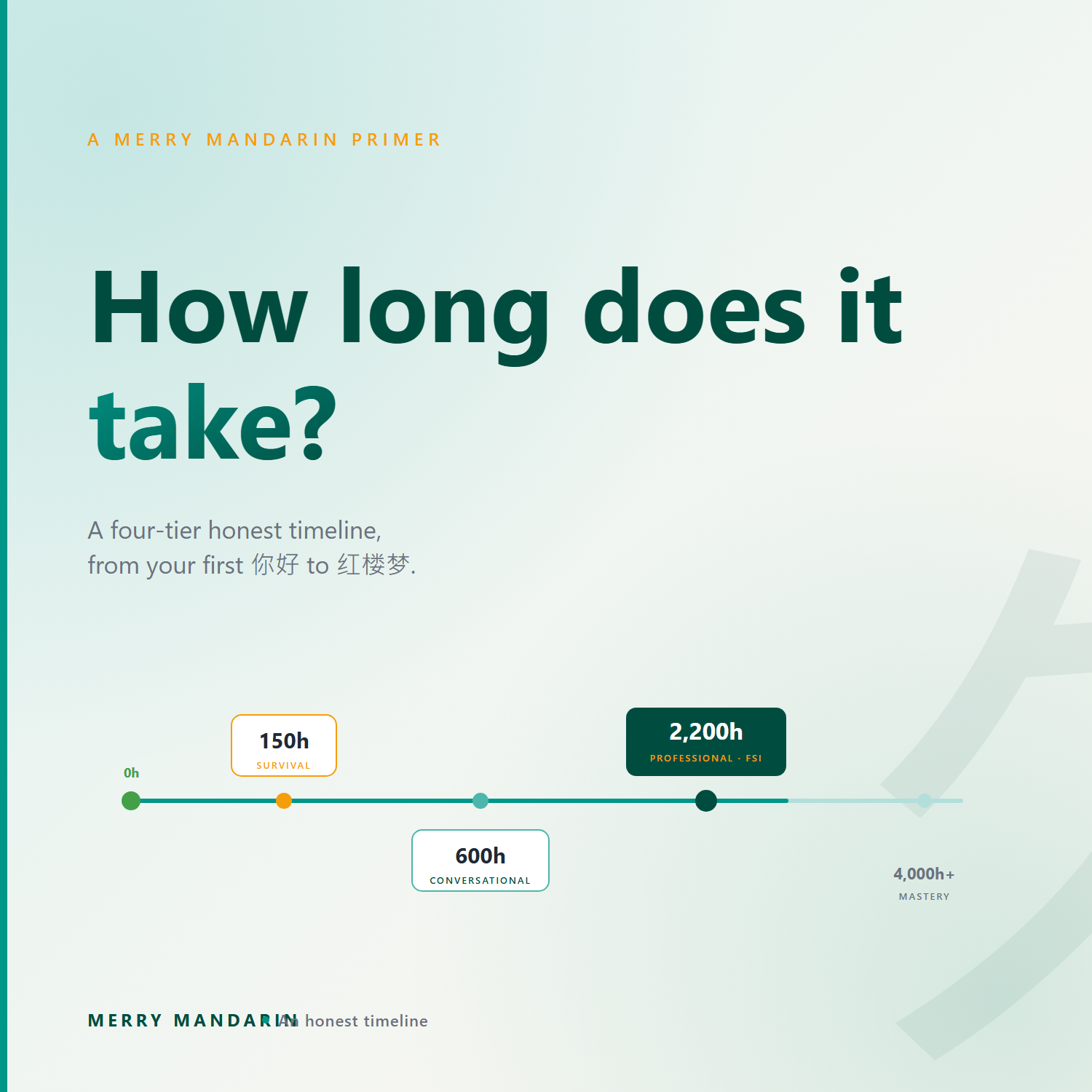
Every Mandarin learner Googles the same question in their first month, and then again in their third year. The first time, they want hope. The second time, they want a map. The promises that come back are mostly lies dressed in motivational language — "fluent in six months," "conversational by summer," "speak Chinese like a native in 90 days." None of these survive first contact. A fluent reader recognizes most characters in about forty milliseconds and a beginner stares at them for forty seconds before forgetting again by Tuesday. So here is the honest answer.
How to Memorize Chinese Characters Using Radicals
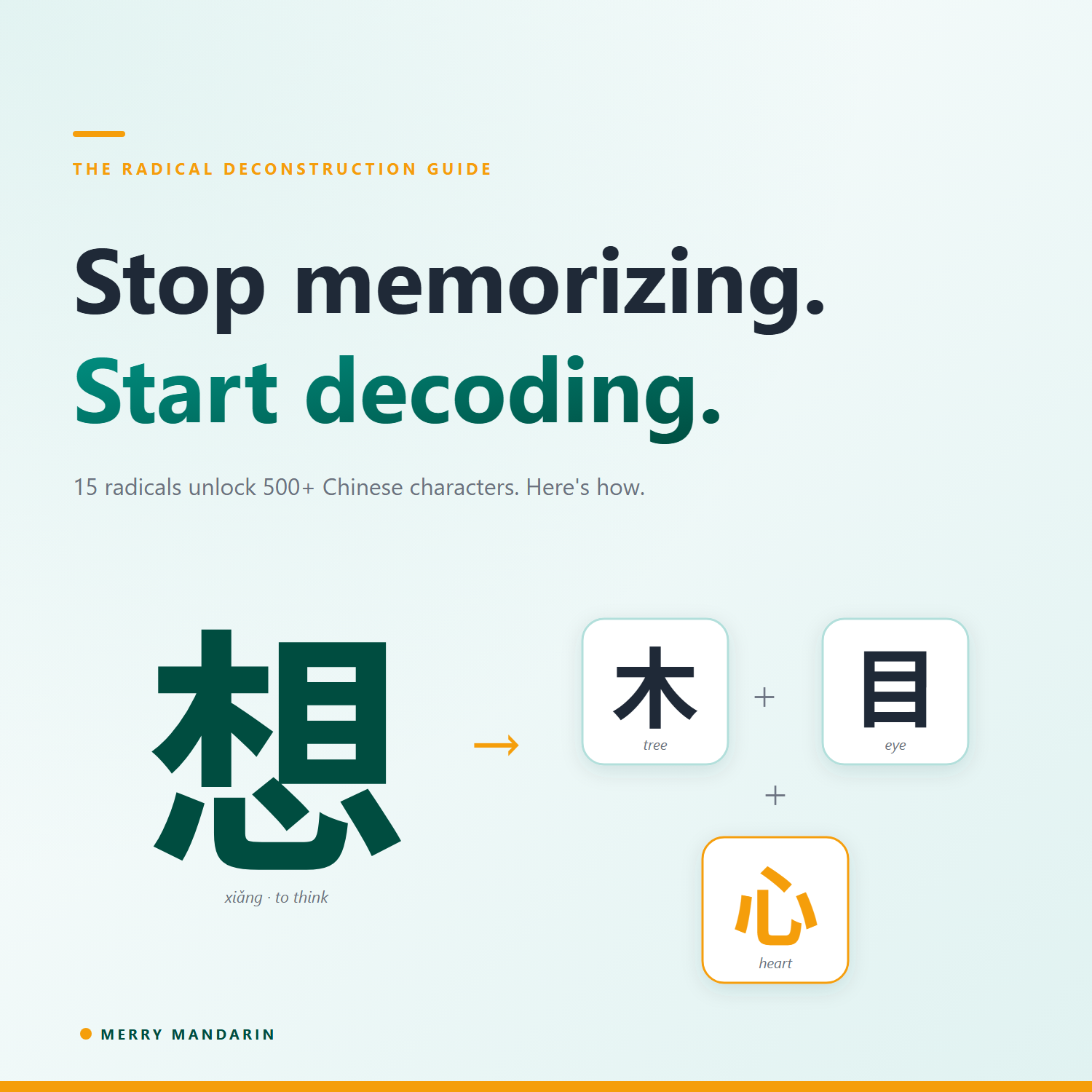
You stare at 想 and see fifteen meaningless strokes. The fluent reader sees a tree, an eye, and a heart, stacked like Lego: 木 sits on top of 目, and the whole top half perches on 心. The character means "to think," and once you can see those three pieces, the meaning is almost embarrassing in its obviousness. Your mind climbs the tree, looks out from the eye, and the feeling settles in the heart. That is not a mnemonic. That is the etymology, more or less intact across three thousand years, sitting in plain view on the page.The gap between your experience and the fluent reader's is not talent, and it is not the thousand hours you have not yet put in. It is that you are still trying to memorize the whole character, and they stopped doing that around character two hundred.
FIFA World Cup Mandarin: 22 Football Words in Chinese To Learn While Watching The Games
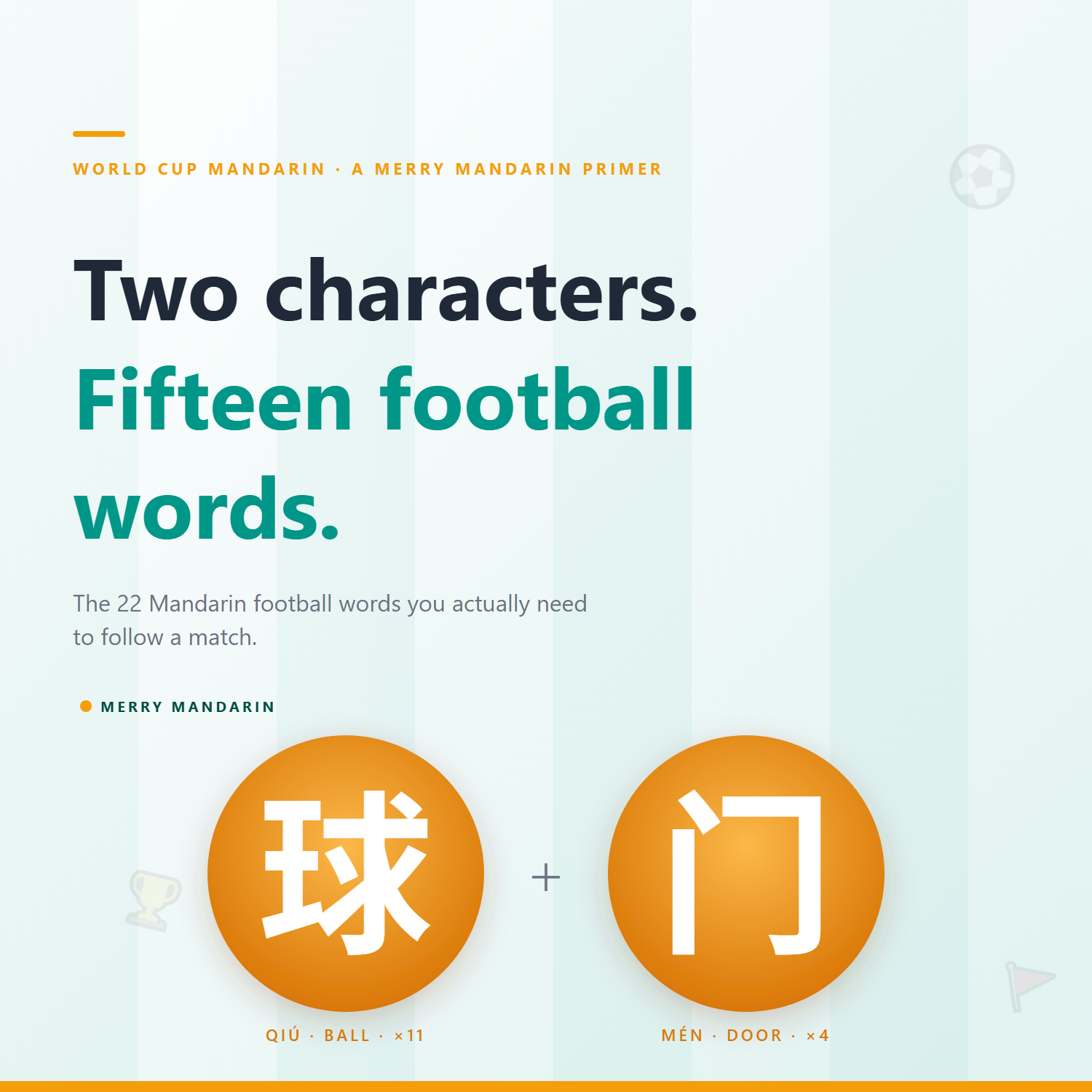
It is the summer of 2026 and the World Cup is mid-flight across sixteen cities in Canada, Mexico, and the United States, a tournament of 48 teams and 104 matches stretched across 39 days (Source: Britannica). In Taoyuan, every café television is tuned to it. You are sitting under a ceiling fan with a cold bottle of Taiwan Beer, watching Mandarin commentary scroll along the bottom of the screen faster than your eyes can land on any single character. Names you half-recognize blur past. Numbers you half-trust flash and vanish. And then you notice something: the same character keeps appearing on screen. Over and over. Three times in one sentence. It rides under the goalkeeper's name, sits inside the word for the stadium, repeats whenever the commentator gets excited.
Why Gamified Language Learning Apps Stall You at Beginner Chinese
You have held a four-hundred-day streak, you can order 牛肉面 without hesitation, and you can introduce yourself to a stranger and ask for the bill — and yet the news headline above the noodle shop still looks like a wall of pictograms, and somewhere around month nine you started to suspect the green owl was the only one in the building congratulating you. The streak, it turns out, had been measuring the wrong thing all along.
Should I Learn Traditional or Simplified Chinese? It's not the question you think.
You haven't learned a single character yet, and you're already stuck.
You opened three Reddit threads. One person said 繁體 is the "real" Chinese — the one with soul, the one Confucius would recognize. The next person called that romantic nonsense and told you to learn 简体 because "a billion people use it." A third told you it doesn't matter, just pick one. They are all giving you bad advice. Not because they're wrong about the facts. Because the question they're answering isn't the question you actually need to ask.
Here's what nobody says out loud: the binary itself is a trap. "Which is better" presumes there's a universal answer waiting at the end of enough research. There isn't. The right script depends on facts about your life — facts no Redditor knows. So before you spend the next year of your life building muscle memory, you need a framework, not a flame war.